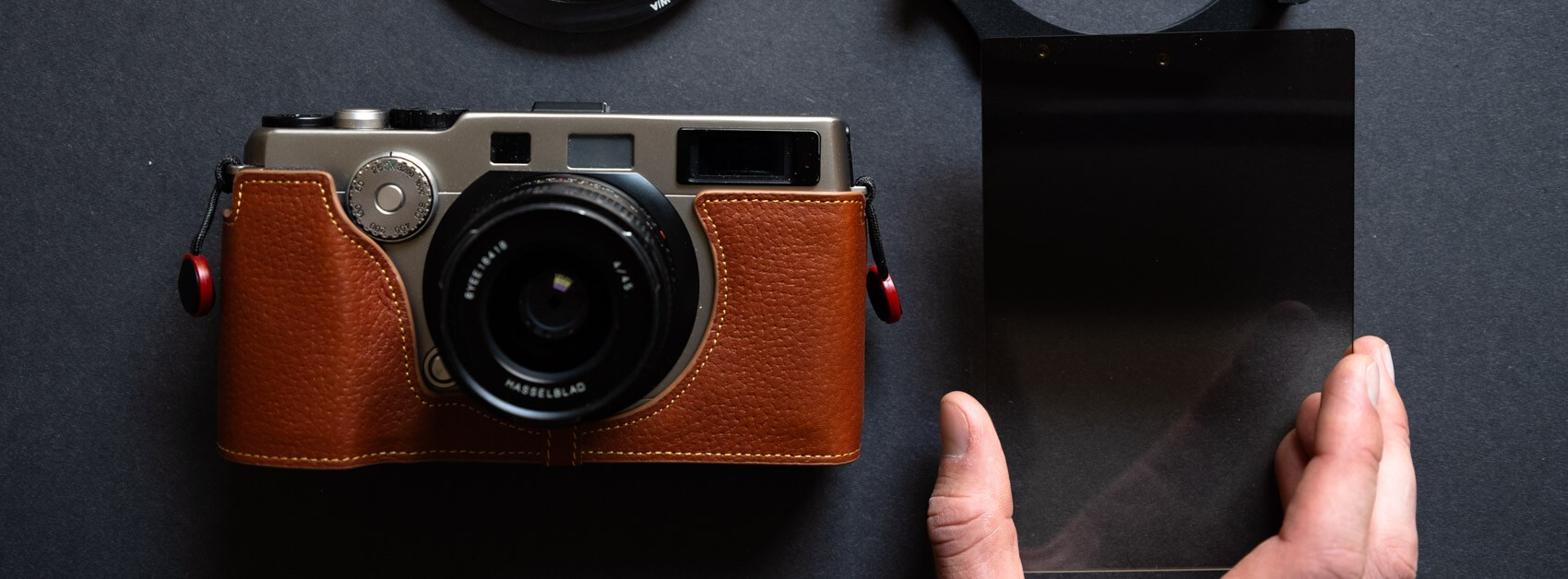
For years I happily shot panoramic film without touching a filter, convinced I could “just expose carefully” and sort the rest out later in the scan or print. ND filters for landscape photography are one of the few tools that can calm a scene before it ever hits the emulsion. In this article I’ll cover the filters I actually use on the Fuji TX 1, how they fit into my metering and printing workflow, and the trade‑offs of hanging a full LEE system off a small rangefinder.
What ND Filters for photography are
In camera terms, filters are pieces of glass or resin that sit in front of your lens to change how light hits the film, before the exposure ever happens. Instead of fixing contrast or colour later in software, filters let you shape the scene in‑camera, which is especially powerful when you care about consistent negatives for darkroom printing.
Neutral density (solid ND)
Solid ND filters reduce all the light entering the lens by a fixed number of stops, without changing the colours. For ND filters photography on film, that usually means extending shutter speeds for motion blur (water, clouds) or keeping apertures wide open in bright conditions. With solid NDs you will need to remember to compensate for the filter, otherwise you will get an underexposed image.
Graduated neutral density (soft and hard grads)
Grad ND filters only darken part of the frame, with either a soft or hard transition between clear and dark. Soft grads are more forgiving when your horizon is irregular, like mountain ranges. Whilst hard grads suit flat sea horizons and very defined skylines. With the Fuji TX 1’s 65:24 frame, grads can be quite a challenge. However, are incredibly useful no matter what, the sky can easily overpower the foreground, like with any other camera.
Polariser
A polariser cuts reflections and deepens skies, and can subtly separate tones in foliage or water, which can help both colour and black and white negatives. On a rangefinder, circular polarisers are a bit of a guessing game, because you cannot see the effect through the lens. Therefore this is also quite a gamble unless you know the game well.
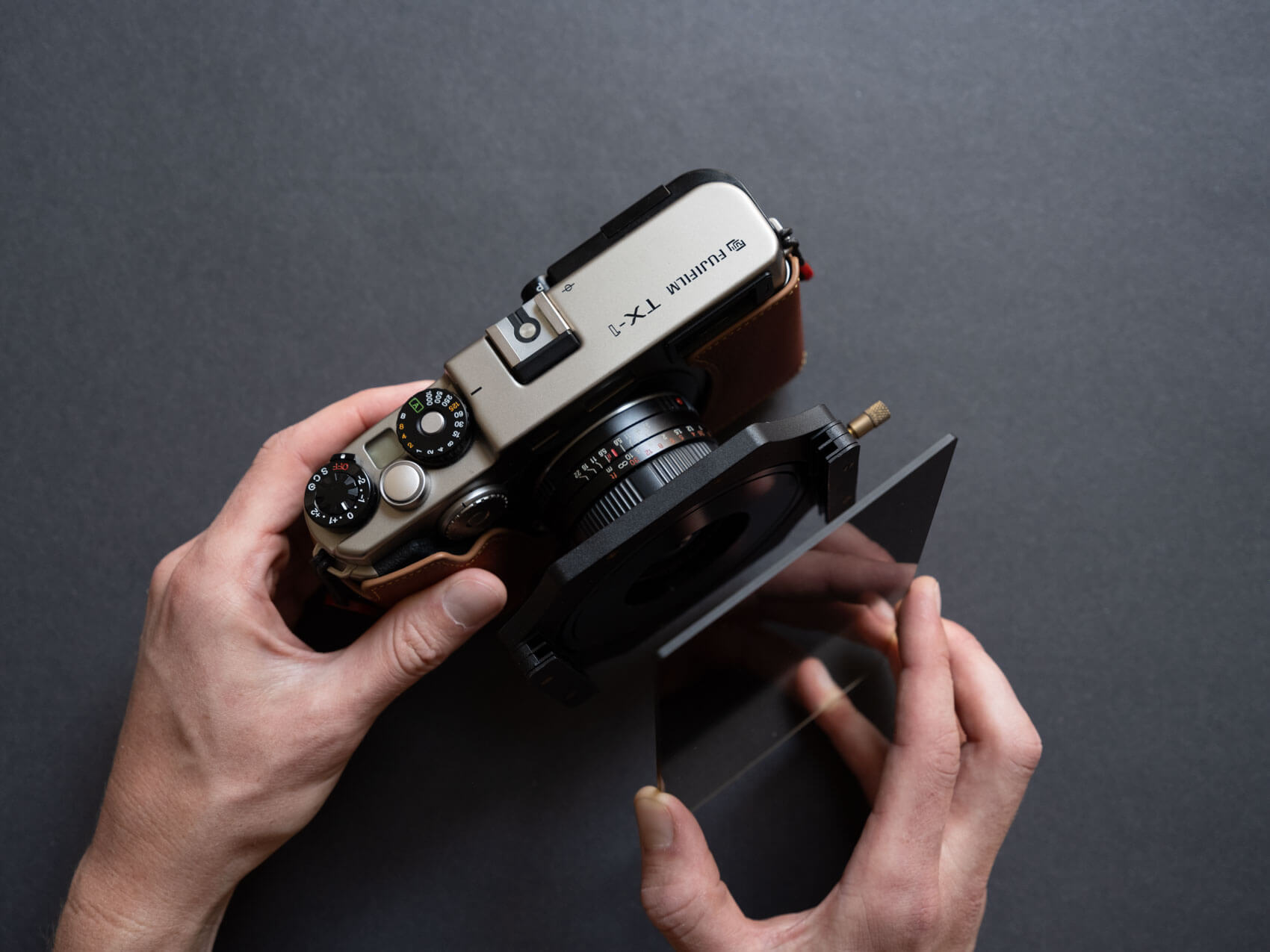
No matter how big of a challenge it might feel, filter do give you more freedom when doing film photography. The trade‑off is, at least in my case, that as soon as the LEE holder and filter go on, my rangefinder view is basically gone. That is not always the case, but in mine it is, just because I bought the filters to fit more than just my Fuji TX 1.
Why Use ND Filters for Landscape Photography on Film?
Shooting film, especially slide or contrast‑heavy stocks, means accepting that your dynamic range is finite and often offers less flexibility post development. Filters are one of the few tools you have to physically compress a difficult scene into what the emulsion can handle. Where a modern digital sensor plus RAW might rescue highlights with local adjustments, film forces you to get more right in‑camera, or live with blown skies and muddy shadows.
Managing dynamic range on film
With high‑contrast scenes, especially in the mountains or at the coast, ND filters for landscape photography help bring the brightness of the sky closer to the foreground so you do not lose detail on either side of the tonal scale. This is even more critical with slide film or dense mid‑day contrast, where the latitude is much less forgiving than a digital RAW file. This requires you to know your film, that comes by either reading the entire spec of the film on the box or by experimenting. You will get it wrong a few times, before you get it right.
Setting the look in‑camera
Filters fit neatly into your existing workflow of exposing for midtones and protecting highlights on the Fuji TX 1. They allow you to pre‑visualise a scene as high‑key or low‑key and push it into the tonal range your chosen film and meter can realistically hold. Having a consistent negative out of the camera makes the rest of the process calmer and more predictable.
Why panoramic format makes filters more important
Panoramic frames often contain a lot of sky and a lot of dark land at the same time, which exaggerates contrast compared to a standard 35mm frame. In that context, grad ND filters photography becomes less of an optional extra and more of a way to keep the sky from turning into a blank white strip across the top of the image.
Why filters felt less critical in the digital years
When everyone went digital, RAW files, dynamic‑range‑heavy sensors and local adjustments made filters feel optional, or at least “fixable later”. Returning to film with a panoramic camera flips that logic. In this case filters give you back some control that software used to give, but in a way that respects the analogue process and your intent at the moment of exposure.
The Two ND Filters I Actually Use on the Fuji TX 1
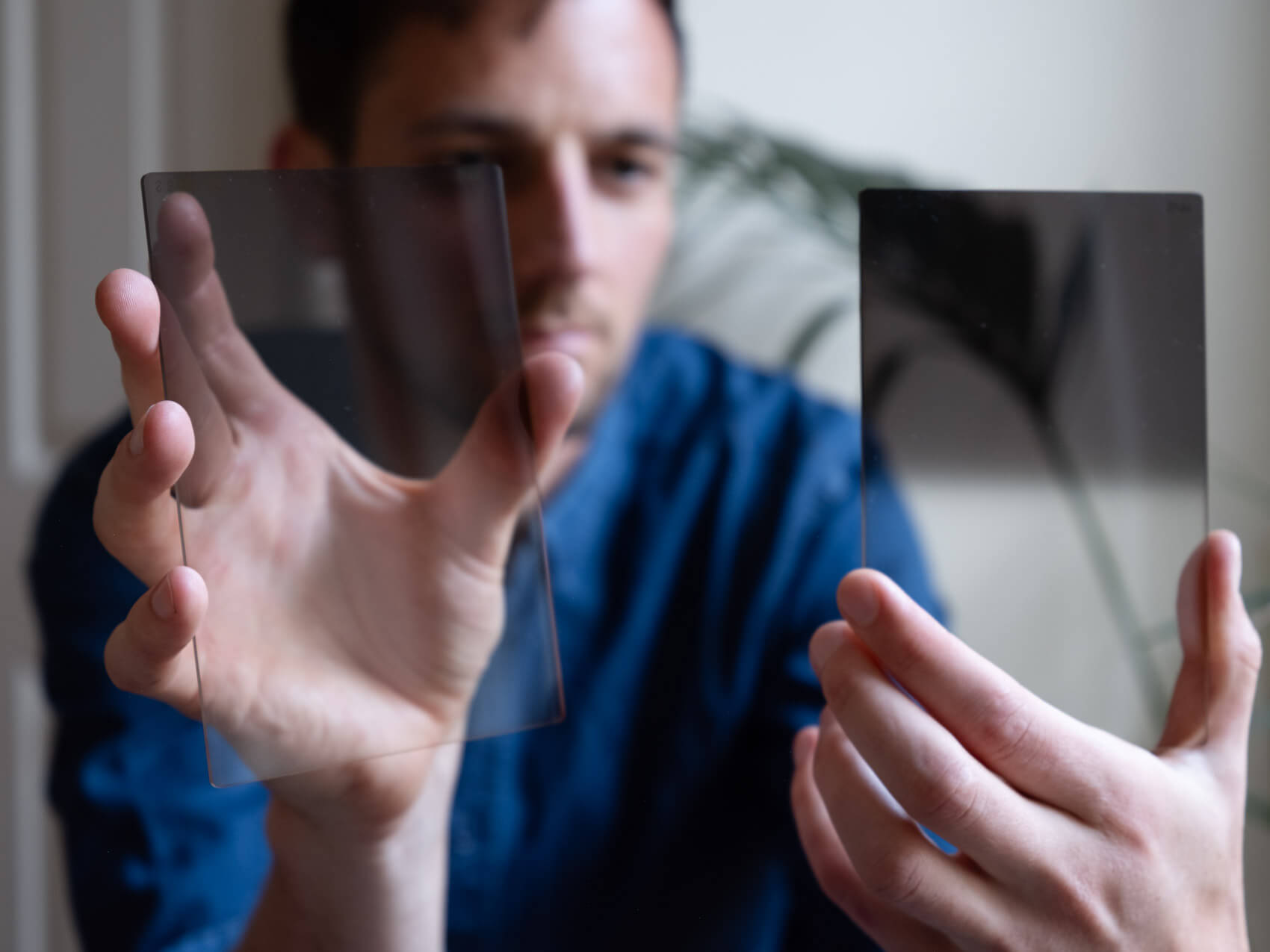
Over time, two filters have actually earned a permanent place in my Fuji TX 1 kit: the LEE soft grad and the LEE hard grad, both used in a square holder originally bought for a 77mm lens and now slightly overkill on a Fuji TX-1 45mm lens front thread. That mismatch in size is unintentional, the system is physically bigger than the camera, but it works. I choose these two grads because originally it felt right to compromise between control and simplicity and not overload myself with a variety of options.
LEE soft grad ND
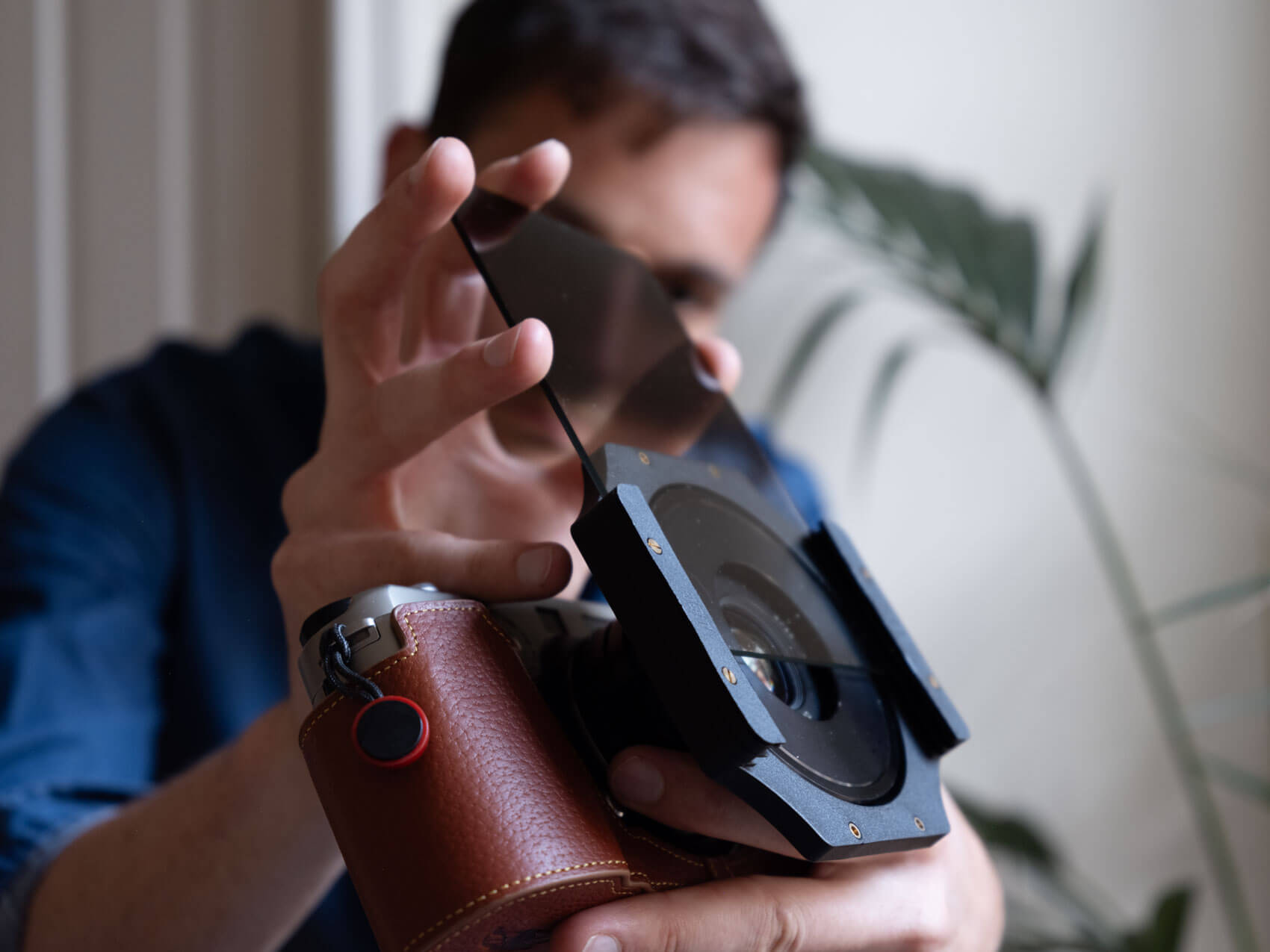
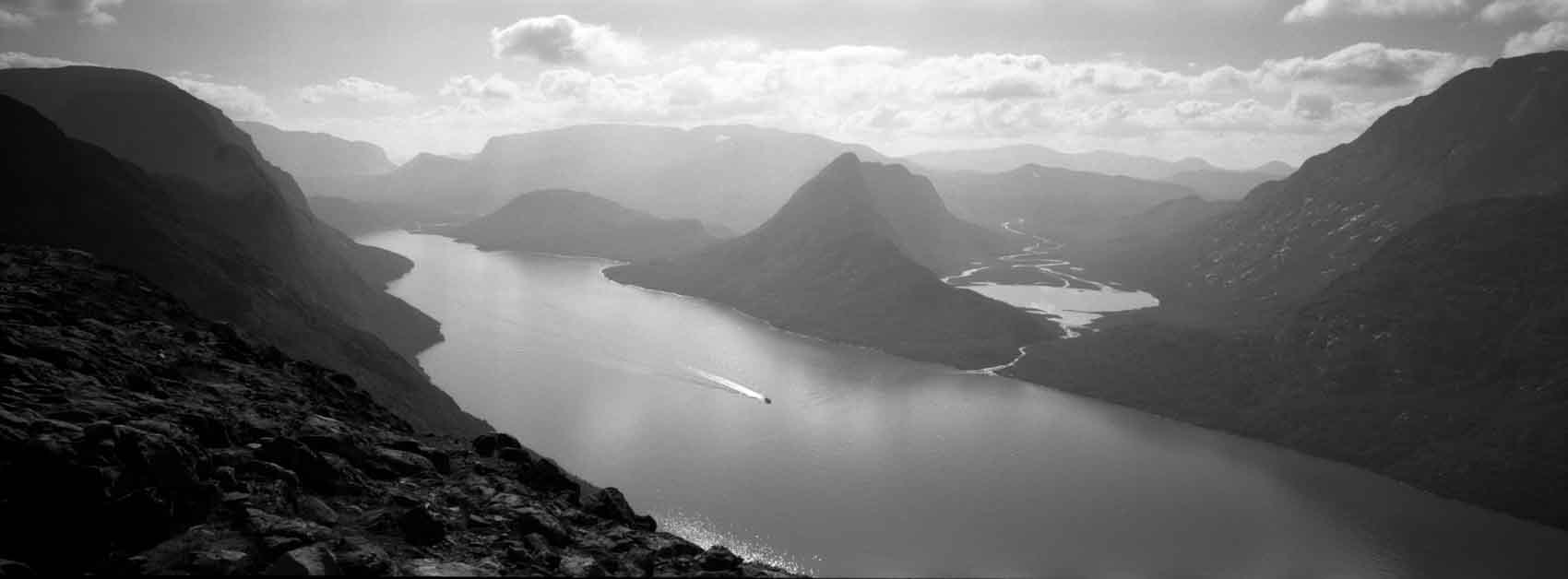
This is my workhorse grad for mountain and fjord scenes, where the horizon is irregular and a harsh transition would cut through peaks unnaturally. Mounted on the 45mm or 90mm via an adapter ring, requires me to compose first, meter the scene, and then slide the soft grad down to tame the sky just enough that both highlights and shadows can sit on the same negative. As can be seen in the photos showcased in my article about Norway and the black and white photos, the soft grad saved the sky. The sun was high, there were some clouds in the sky and the difference between the exposure for the clouds vs the ground was too big that it required a ND filter to compensate for the bright white cloud to balance them out.
LEE hard grad ND
The hard grad is a bit more specialised, and you reach for it when the horizon is clean and flat, such as seascapes or lakes without much clutter in the skyline. On the Fuji TX 1 , that sharp transition demands a much more precise alignment due to the formats width and rangefinder format. Therefore the hard grad is quite a gamble to get right on the Fuji TX 1.
Pros of ND Filters for Landscape Photography
The obvious benefit of ND filters for landscape photography is keeping highlights and shadows within the usable range of your film, but the knock‑on effects show up later when you scan and print. Filters do not just save skies, they shape how a whole series of panoramas hangs together tonally. I believe the filters deliver the following benefits:
In ultra‑wide scenes, especially for high‑contrast black and white scenes, grad ND filters allow detail to exist in both bright clouds and deep valleys with a single exposure. Filters help me in landing in that sweet spot with the right exposure more often.
Filters reduce time spent on potentially rescuing problem frames and more time refining the mood of images that already work.
Filters become one more tool to “move” parts of the scene into specific black to white zones for the film. A soft grad might pull the sky down a zone or two while you expose for a mid‑tone on a mountain face, effectively compressing reality into something printable without sacrificing the captured drama you hiked for in the first place.
Filters are often overlooked when shooting digitally, as you can directly control the raw file on your device, whilst you have the same or almost similar control with film, very little people actually still play with the edit in the darkroom. For that reason it is very convenient to be able to control the different highlights and shadows that you are trying to expose for in first place.
Limits of ND Filters Photography on a Rangefinder
All of this control comes with trade‑offs, especially on a small rangefinder that was not really designed around big filter systems. Understanding those limitations upfront helps decide when photography with ND filters is worth the hassle and when it is better to simply expose carefully and accept the scene as it is.
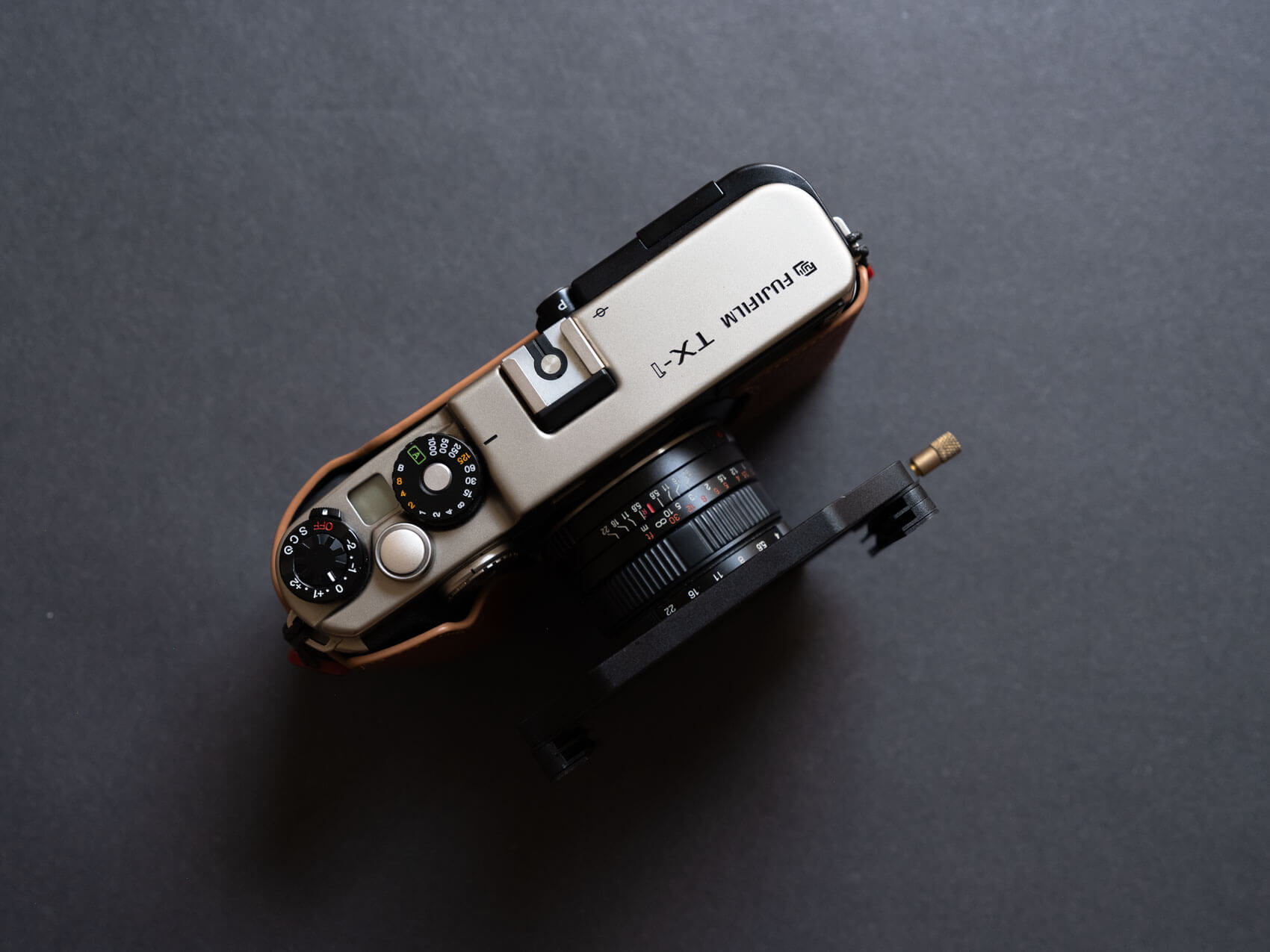
Rangefinder blocking - With the LEE holder on the Fuji TX 1 , the viewfinder is essentially blocked. It is impossible to see the scene properly through the camera anymore. The practical workaround is to compose and focus first, then mount the holder and filter, and trust your process.
Metering challenges - The Fujifilm TX-1 meters through the lens but you cannot see through a covered viewfinder, therefore it is recommended to meter the scene without the grad, expose for a mid‑tone, and then mentally account for the strength of the filter you are about to slide in. On top of that, my Fujifilm TX-1 already meters about a stop hot, so compensation for both the meter’s bias and the filter factor becomes part of your mental plan.
Flare and wide angles - The 45mm hood is not always enough to prevent flare, especially with strong side light. Adding flat glass in front of the lens creates more surfaces where stray light can bounce. Therefore it is important to carefully hand‑shade the filters when you have the holder mounted.
Practical bulk and handling - This might be unrelevant to most, as most optimise the filters for the lens, but in my case I bought the LEE system originally for a larger 77mm lens, which means it feels oversized on the Fuji TX 1’s 45mm lens. The Fuji TX 1 camera system is usually celebrated for being compact and travel‑friendly, the filters add more bulk, more setup time, and more things to juggle when you are already on uneven ground or working quickly.
Start Small, Stay Intentional
What I’ve learned is that filters don’t replace good metering, patience or luck with the weather. They sit alongside them. On the Fujifilm TX-1, ND filters for landscape photography give me just enough control over sky and foreground to make the most of a scene, without promising miracles when the light simply isn’t there. A soft and hard LEE grad, mounted on that slightly ridiculous 77mm holder, have proven their worth often enough that I’m willing to accept the extra bulk and blocked viewfinder. If you’re curious where to start, I’d suggest one soft grad, an afternoon in a high‑contrast landscape, and a willingness to experiment. From there, you can decide whether ND filters photography becomes a core part of your panoramic toolkit or something you reserve for those few, demanding scenes where the film needs a hand.


