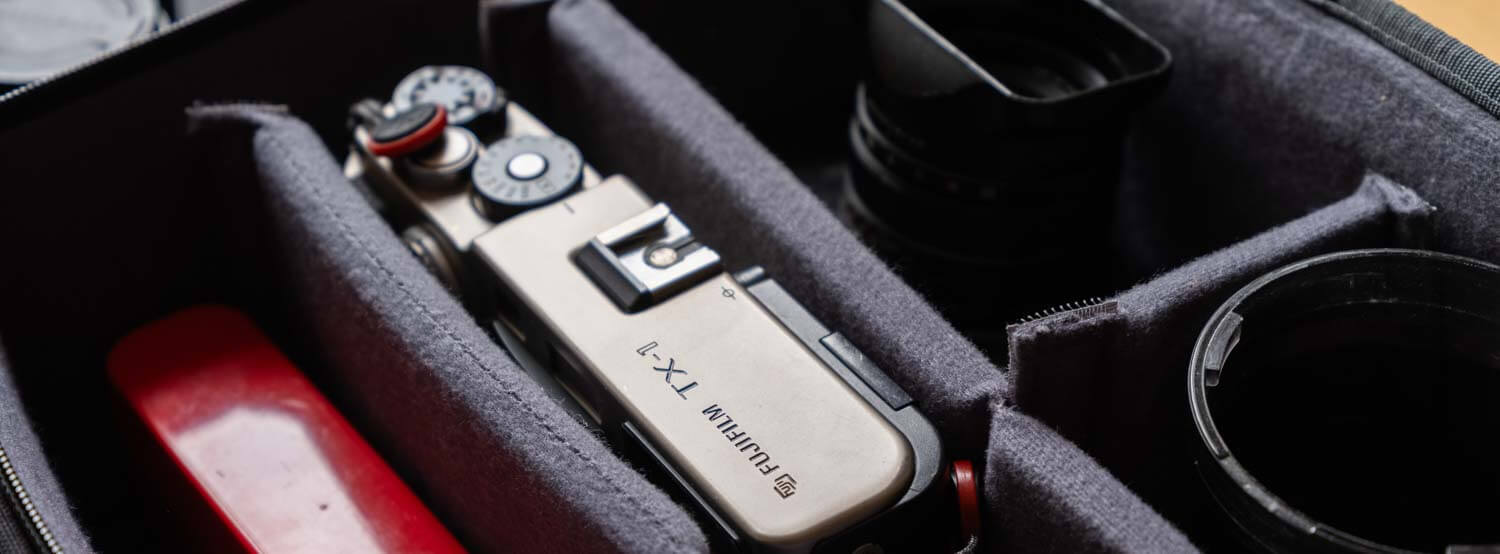
Why every trip needs a to go film
My to go film for traveling
When I travel, I always pack a to go film kit. It removes indecision, keeps me shooting, and gives me a reliable setup for changing light, unknown locations, and limited access to film.
You grab you camera, batteries and lenses. Then it hits you, what film should you bring or actually, what film should you not bring? What situations will you be in, what will you see and what do you actually want to take photographs of?
This is where I often get stuck. I want to be prepared for it all. Yet, a camera only allows one roll of film at a time. There are too many options of film to choose from. Different brands, different colour options, different speeds. I sit down and just look at everything I can choose from and feel paralysed.
Knowing fully well, that I have a decision to make, because on the road I will most likely not have the time or actual shops available for film. A good to go film should be available, affordable, and predictable. Therefore I made my to go film setup. Rolls of film I will always bring no matter what. The film I know well, I can rely on in a multitude of situations and is consistent in delivery as well.
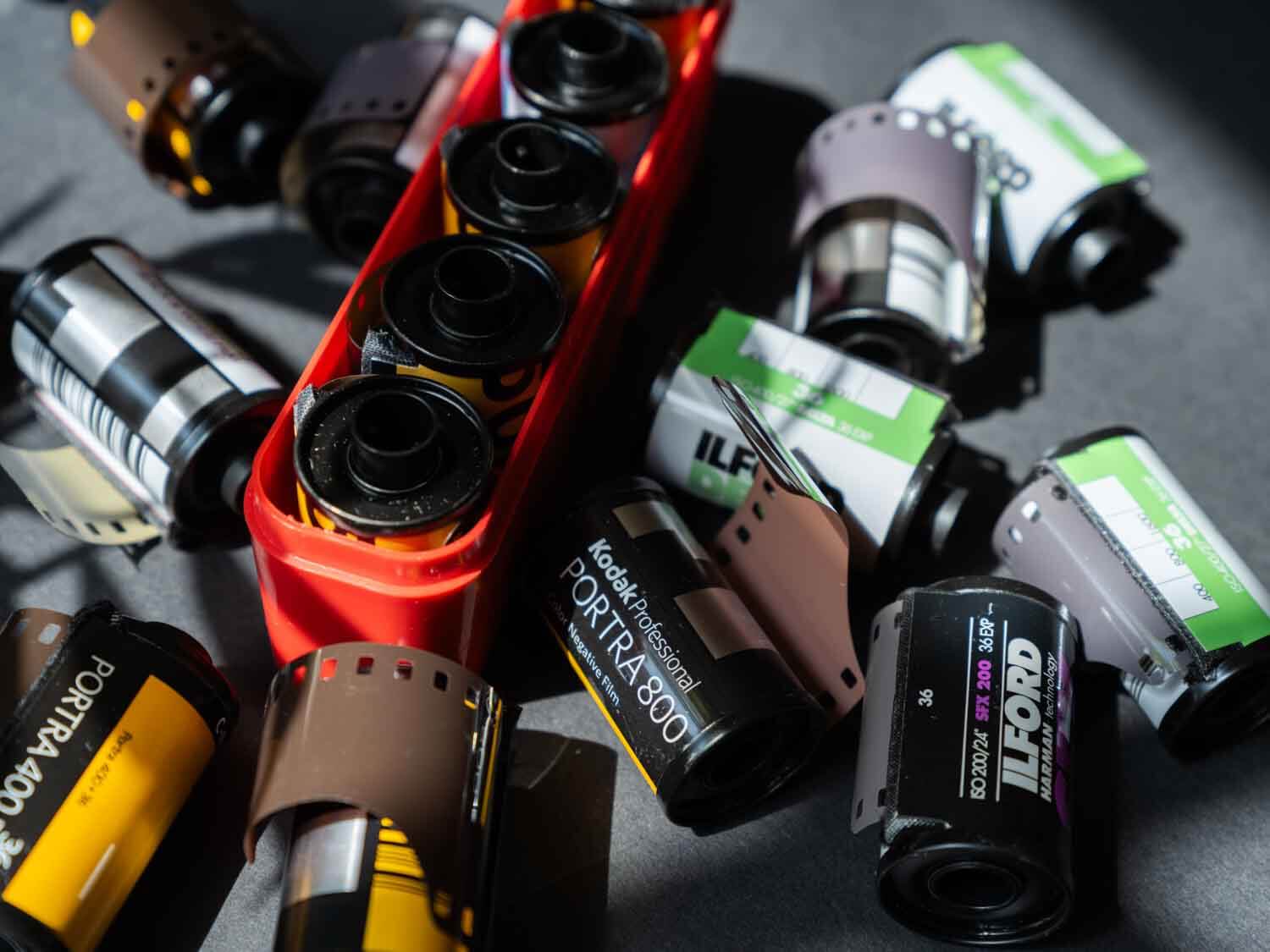
How I Choose My To Go Film
Whilst traveling you are exposed to situations you might not have known before hand, because you will most likely see places you haven’t seen before. This means your to go film needs to be flexible enough to handle loads of situations. I therefore recommend to choose your to go film based on a few different criteria and one of them being the latitude it can handle. In case you make a mistake or the light is changing fast, you still want to be able to walk away with a decent shot.
Secondly, it should be reasonably available and affordable. You don’t want to be stopped from shooting, because you otherwise run out of film and don’t know if you will find it again or a single shot is too expensive. The film should serve it purpose and that is capturing images, not making you worry.
A single film can’t cover every type of light, therefore you will need a mix of ISO speeds. Once you have determined your brand and type of film, make sure you can get it at different speeds. This will allow you to cover a multitude of different light situations without changing your look too much.
Once you will try to make a series, you will realise that consistency in grain, contrast and colour will significantly help you. Ideally, your to go film is a film you know so well that you can pre‑visualise the result before you meter. Don’t bring unknown film, unless you do it on purpose.
My Black and White to go film
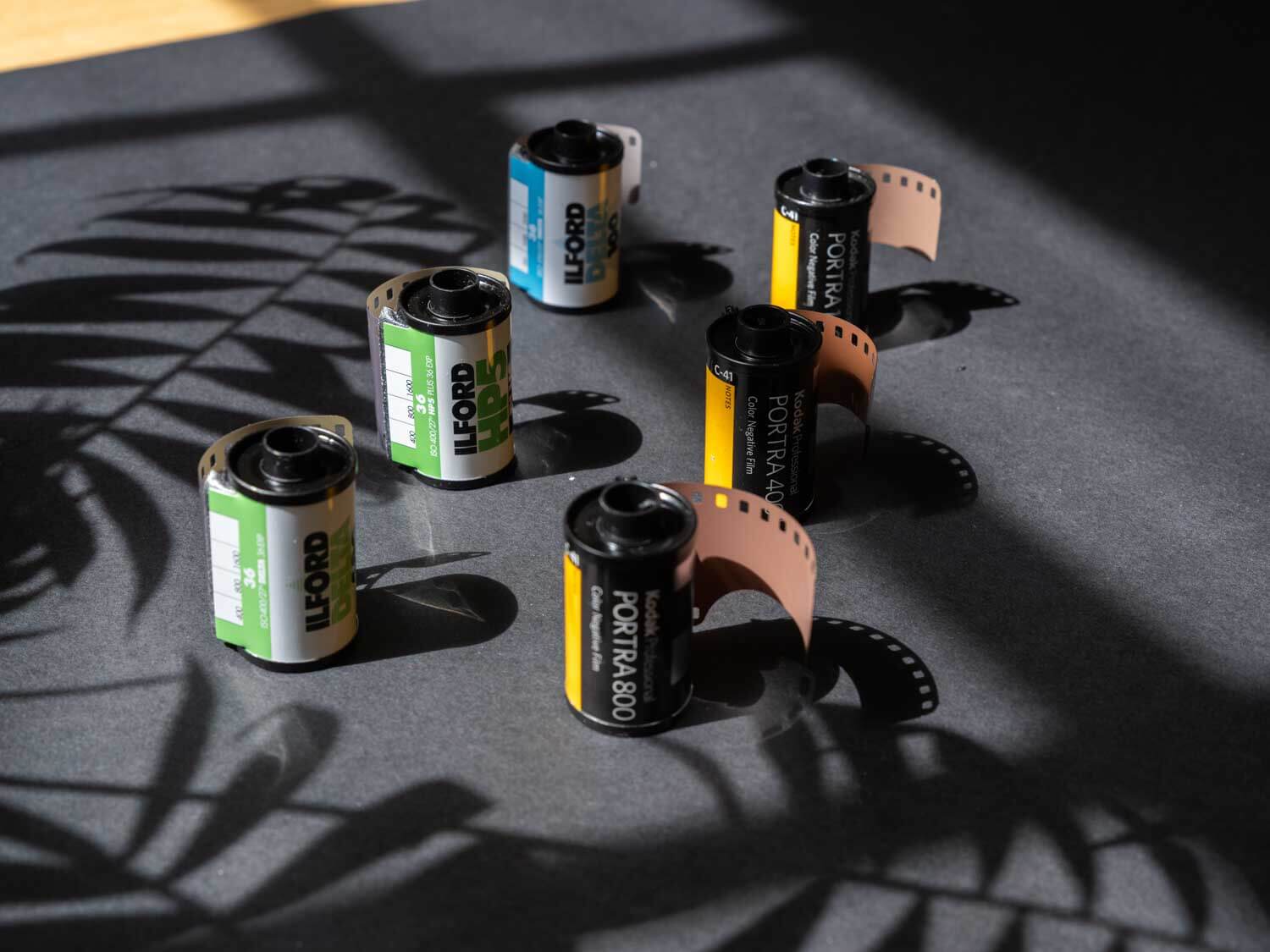
For black and white I have my to go film type, one that I know very well. I will always bring Ilford Delta 100 and Ilford Delta 400. I only bring film I trust enough to make part of my to go film kit. The 100 ISO I use for bright days and when I want very fine grain and maximum detail. Even though the 400 ISO is very similar in quality, it will capture more light, therefore perfect for overcast days or shade and when I need it, it will provide me enough sensitivity for bright circumstances after sunset.
Delta provides smooth tonality and forgiving negatives. Something I require when I don’t know the circumstances I might be exposed to whilst taking my panoramas. In general I tend to use black and white during harsh midday light or photographing graphical shapes and when the colours don’t combine well.
My colour to go film
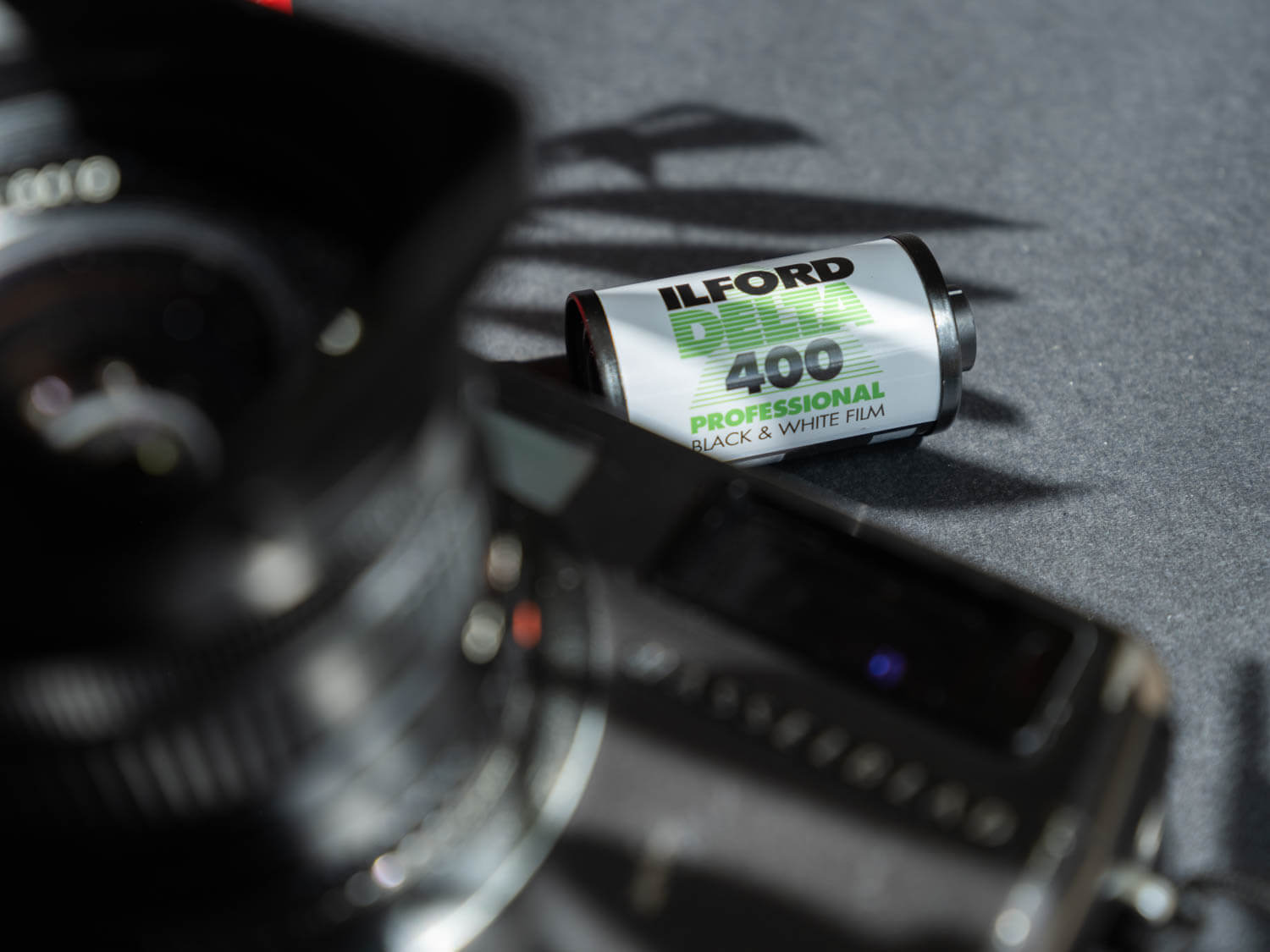
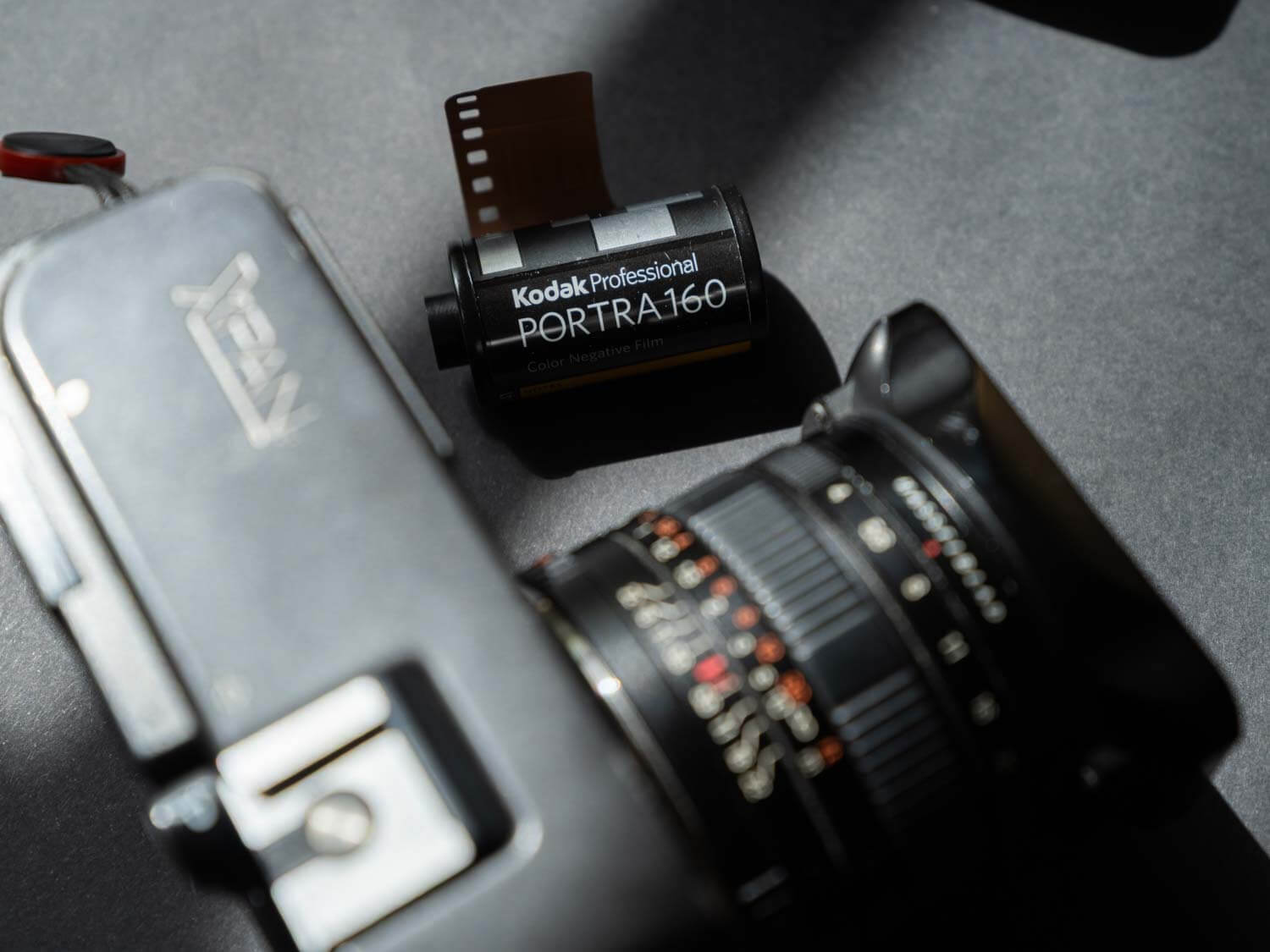
Additionally to my black and white film, I have my to go colour film. One that rarely disappoints. It is an obvious one, but also an expensive one unfortunately. Kodak Portra, perfect for softer skin tones, subtle colours and good dynamic range. Additionally, the film has consistent colours with every speed of the film. My usual go to film is the 160 speed, but that requires sunny or bright days. Whilst the 400 ISO is perfect for normal days and gives me some flexibility and the 800 ISO is perfect for evenings.
It is not a cheap film, but it is a film I can heavily rely on and know the outcomes are as I like them to be. Therefore very little risk bringing them to any kind of situation.
What I Leave at Home
Films that don’t make the travel cut
Anything I can’t rely on. That is either because I didn’t shoot enough with this specific type of film yet or because it is subject specific and overly stylised. I have a lot of respect for photographers who can work well with ultra contrasty film, in my case it just stresses me out. I want to make sure I have decent details in shadows and highlights and everything in between, I love to see the whole range properly. When I shoot with contrasty film, I tend to get nervous and realised over time that the decisions and results are not the way I like my photographs to be in the long run.
I don’t bring the film I am not too familiar with, because I want be able to shoot in scenarios and know what the outcome will be. If I don’t know if the film will surprise me, then I couldn’t make it work in my favour or use it to its utmost capabilities. That means the photo could have been better. It requires practice with different types of film, but there hasn’t been any film yet that excites me that much to expand my commonly used types of film.
Lastly, I am a bit careful of bringing or getting film that I can’t easily find. If I fall in love with this type of film and let my “creative success” rely on it, I suddenly rely on a stock that I can’t control. Let alone replace in a location I might not know the local film shops, if there are any. Due to my random travel adventures, I tend to also bring film that can withstand different environmental aspects. It needs to be able to withstand high and low temperatures, high and low humidities and not break on me whilst traveling.
Packing and Flying with Film
When traveling I live by a few simple rules:
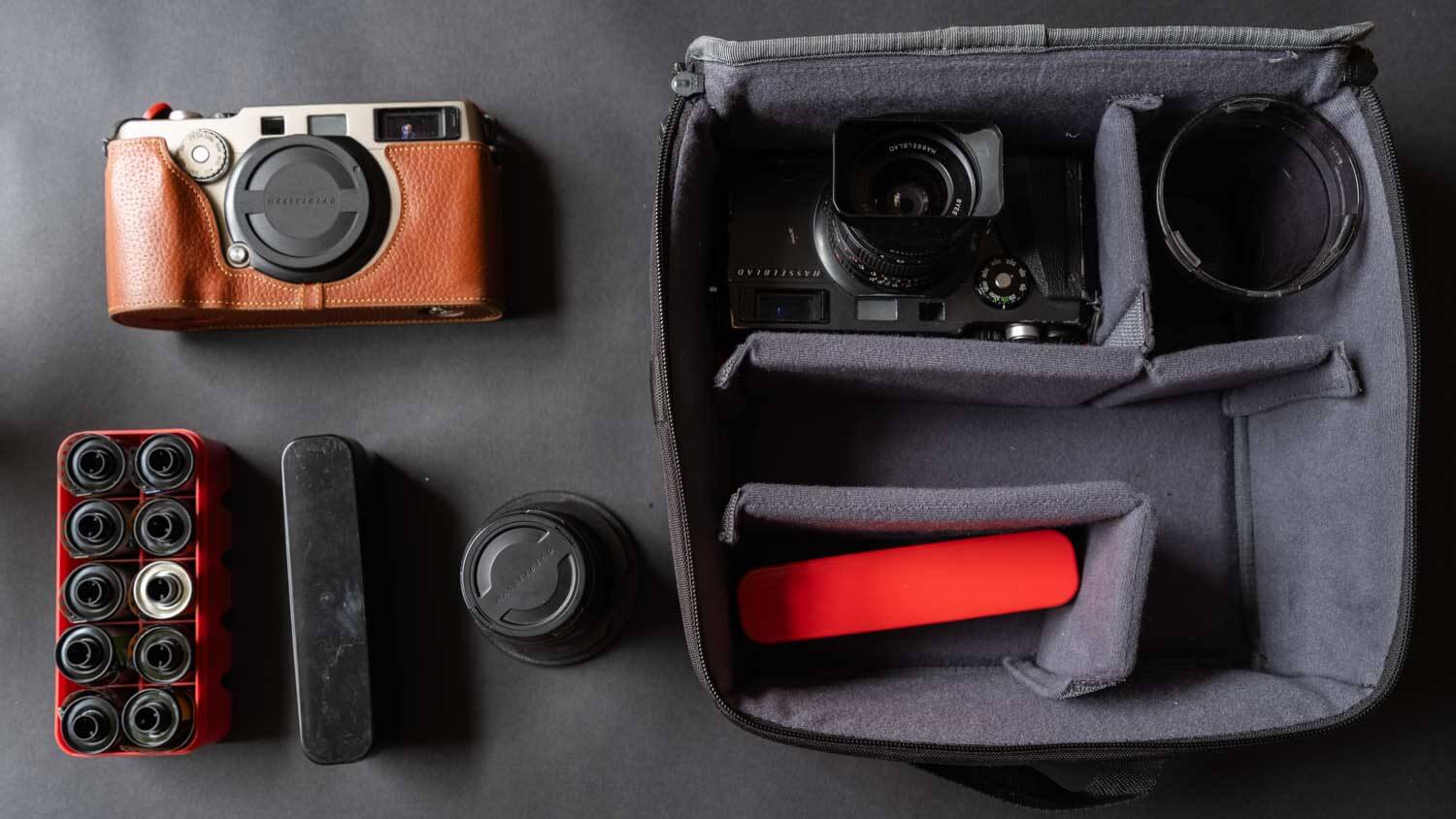
All film goes in carry-on, always.
All film is packed in transparent ziplock bags
I have three categories:
Colour
Black and white
Used rolls
Have film containers for daily use
Elastic band to hold things together
Use paper tape for notes where necessary
Bring a note book for film notes
Most of the rules are not only relevant for flying but also for daily life whilst traveling. The ziplock bags and carry-on are essential for flying. The rest is less essential for flying, but very useful for traveling. The film containers are great when you leave some of your film in your hotel, because that can stay in a ziplock bag, whilst the film that you carry can then be protected by the case. The film will be exposed to a lot of bumps and different environments, with a case, this is one worry less. Lastly, film might be overexposed, a roll might have had an issue or might have rewind itself without being exposed and this can easily be identified by a piece of tape. It then stands out from the rest and does no harm to the film whatsoever.
Putting It Into Practice
How to build your own “to go” setup
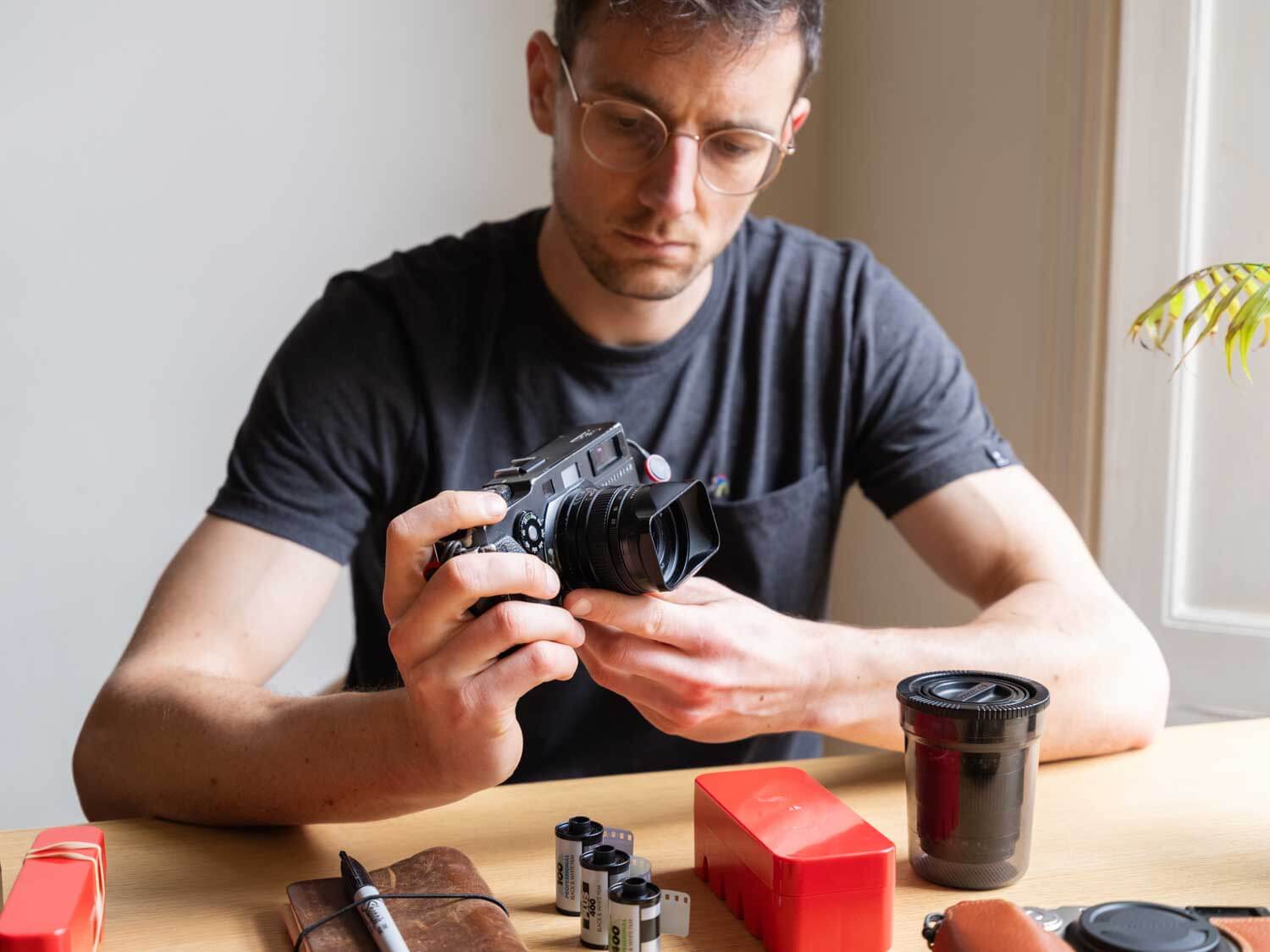
Start simple, bring one black and white film you have shot often with and know you like. Preferably a film that is versatile and can be pushed or pulled. This allows you to shoot it in lighting situations that you might not have opted for in the first place, but at least you can take photos.
Then bring the same film in faster and slower speeds, allowing you to not only rely on the weather you hope to get, but also be able to shoot when the weather is drastically different than you might have expected. Then do the same for a colour film.
Once you have established a good base of film that you like to shoot with, go on several trips with this base kit. This allows you to find situations that might require to expand or decrease the size of your kit. As long as you review your to go film kit and iterate upon it after every trip, you will end up with the best and most reliable one that you can own.


