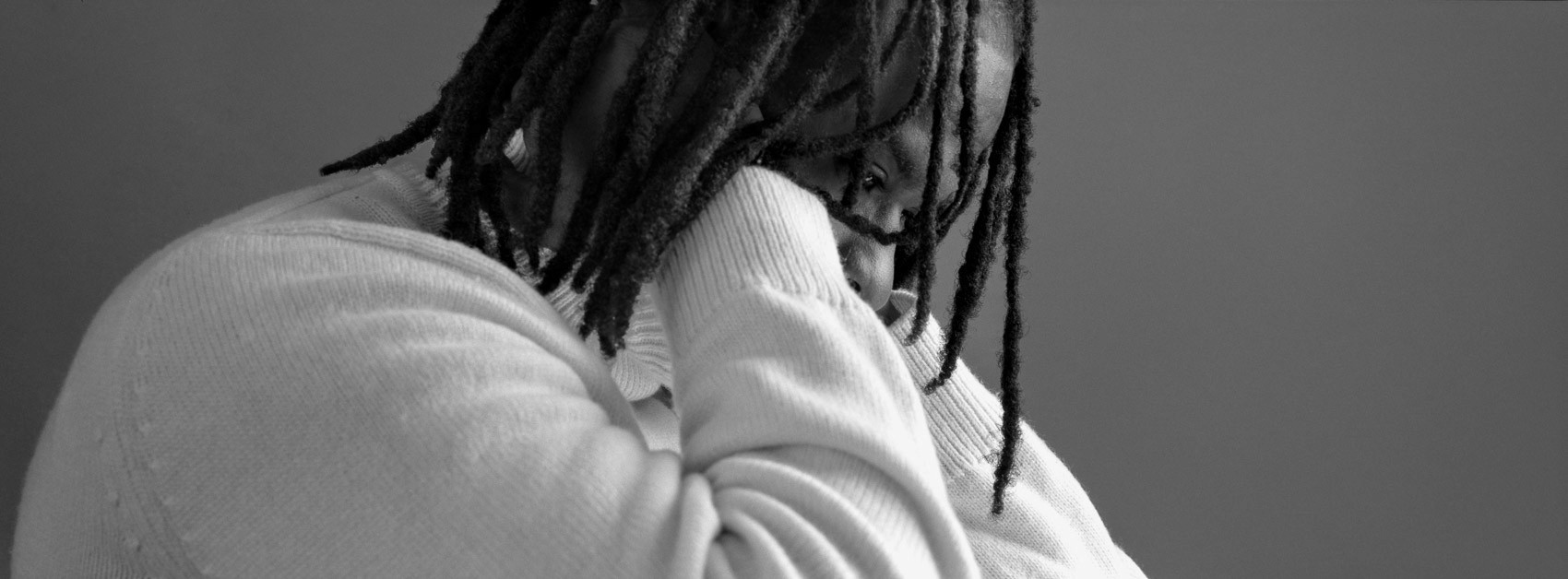
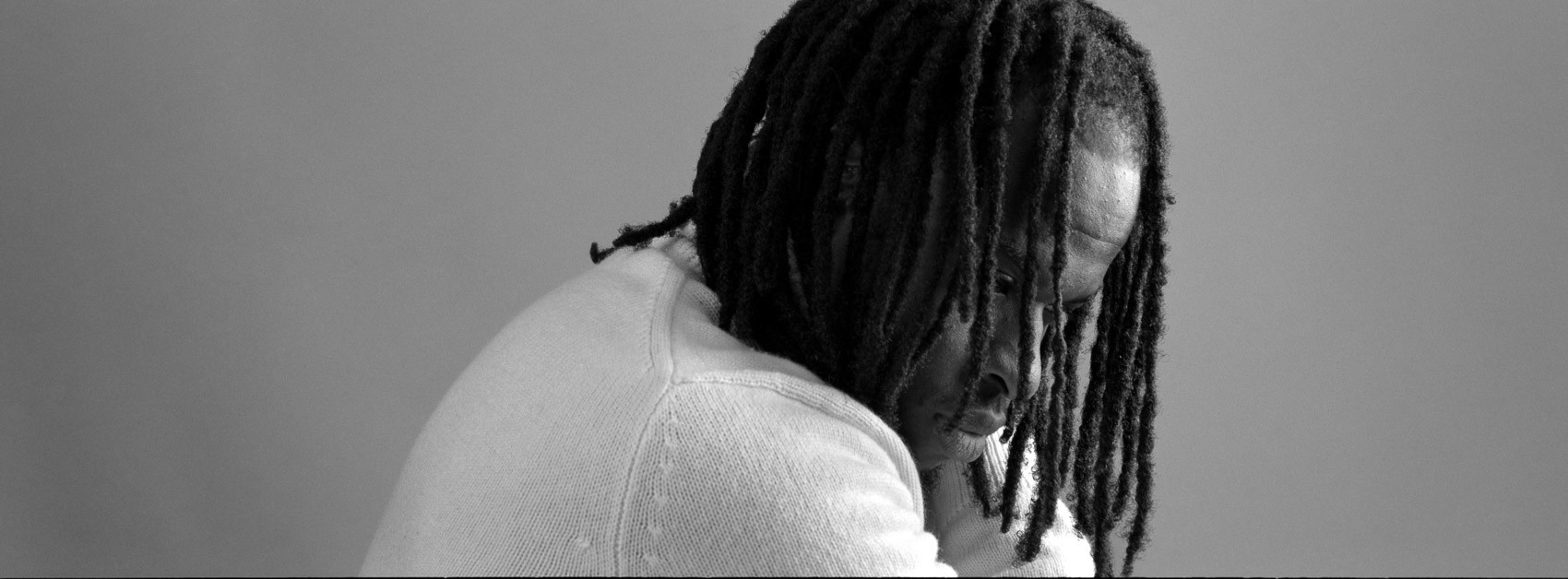
I have these creative visions every now and then, and this was the result of one. The spark came from a mix of inspiration, the model's introspective personality, and his striking hair that begged to partly obscure his expression. I used film photography with flash to capture a thinking close-up pose in panoramic format, filling most of the frame to accentuate the depth of the feeling.
Shaping the Vision
What was my aim with the photograph, how did I come up with the idea
The intent of the photograph was to showcase someone lost deep in thought, and feeling slightly stuck. Whereby I fill the frame with his body to accentuate the feeling. This was a challenge on the panoramic Hasselblad XPan. Whether that meant completely filling the frame or partly was something I was going to figure out during the shoot. This depends on how close I could get to the model and how well I can manage him to express his feelings.
In flash film photography, lighting and setup were key for the black-and-white impact, contrast had to support the mood without overwhelming simplicity. Simultaneously I had to make sure simplicity retained. Whilst filling such a wide frame with a closeup is difficult or nearly impossible, I wanted to get really close up to the subject and fill as much as possible. The Hasselblad XPan has some limitations and filled close-ups is one of them. Therefore I might needed to include more than just his head.
Lastly, to convey the emotions powerfully, I want to make sure I shoot straight at eye height or slightly above. However, considering the position the model might be in, it might make it hard to find an interesting angle from slightly above. A lower angle could reveal expressions better but risked a too-powerful stance.
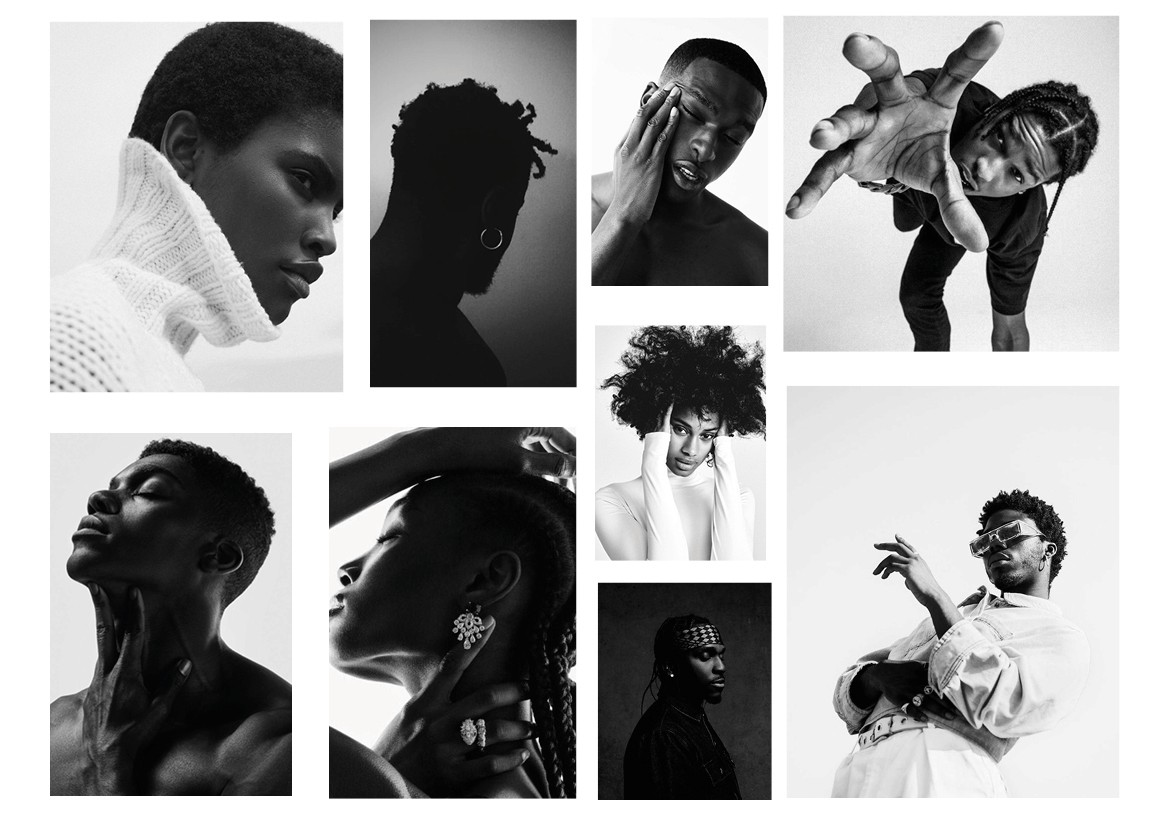
A collection of portraits or close up images made by photographers that portray a deep thinking emotion (not photographed by me and owned by respective owners)
The setup
How did I set up the light, where is the background, where was the camera, did I use a reflector
The equipment used for the photoshoot:
Godox AD600 flash
120cm soft box
White paper roll background
White reflector
Hasselblad XPan (90mm lens)
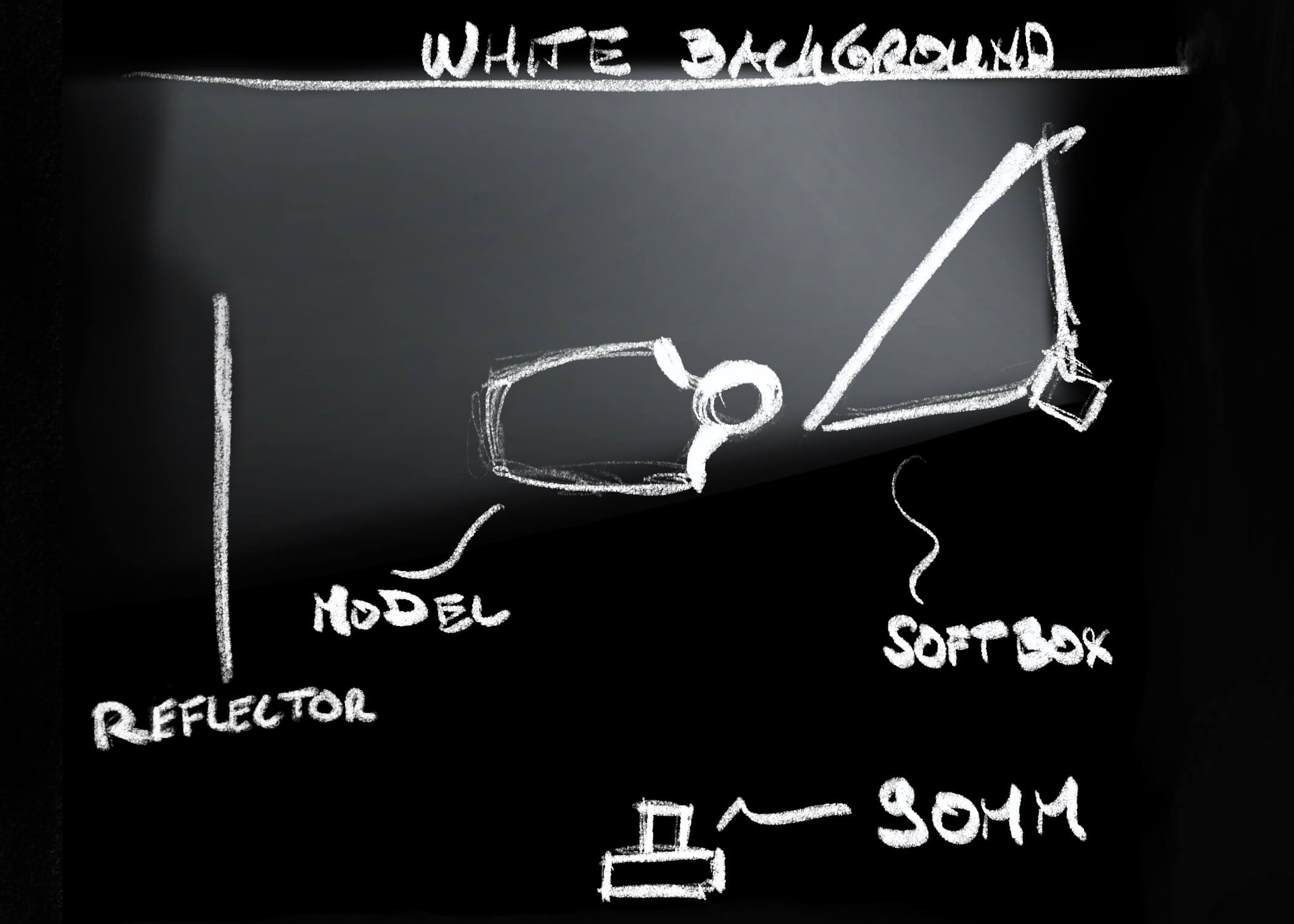
The setup was fairly simple. The background was a white paper roll and in front of it, around 1,5m (5feet) away from it, was the model. This allows the light to spill onto the background without overpowering the background and turning it pure white. Additionally, I rotated the light away from the background to make sure it would not be directly lid by the flash.
Behind the model I placed a big white reflector to fill in any shadows. This was important, because I want the photograph to have a lighter feel. This approach will just brighten the shadows up.
Pose
The model I positioned on top of a chair to allow him to more comfortably position his body in angles that were required to fill majority of the frame.
When positioning the camera, I wanted to make sure the models eyes were at 2/3 from the top and the side. Meaning that most likely his gaze would be close to the edge frame, which would accentuate the feeling of not knowing what’s nearby accentuating the feeling of being deeply in thoughts.
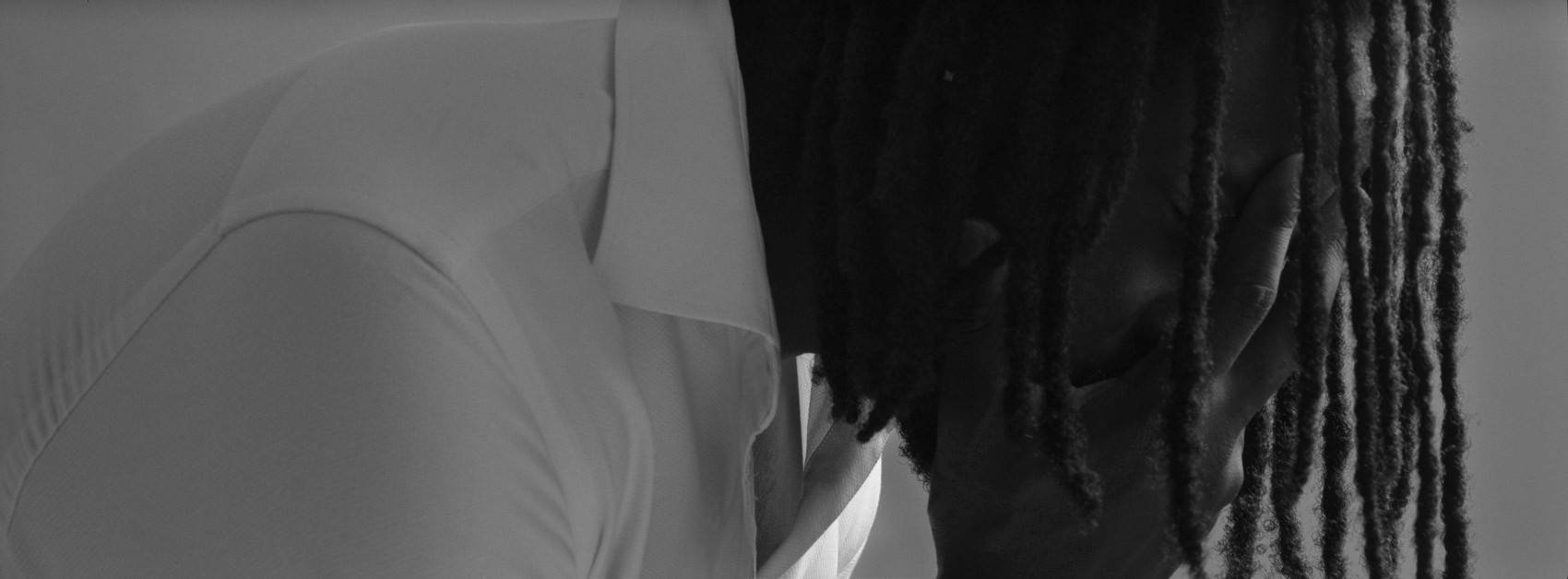
The trickiest part: partly hiding/exposing his expression with hand and hair. Hair locks were trial-and-error to control.
The metering
As I was working with a flash, I could not rely on my in camera light meter. For that reason I used my external light meter. This was also important, because even without the flash, the in-camera metering would be confused as it would not understand that the dark coloured skin should retain its shade. Often older cameras would think the skin is supposed to be a mid shade, which in this case is obviously not true.
I then also metered the reflected light coming from the back of the model. This was 3-4 stops less than the key fill. Which would be perfect as the key fill would make sure the white would be in zone XII .
As I was shooting with a flash, the shutter speed didn’t matter too much, except for not being too fast (kept below sync). For achieving the right depth of field, the aperture was set to f/11, in hindsight, I should probably have set it to f/16.
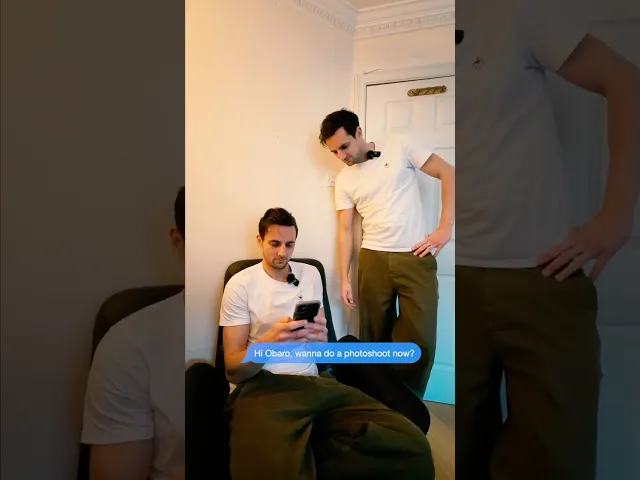
Working with the Model
Understanding your model's capabilities is key. Prep with a mood board of poses and inspirations.
When working with models, it is very important to have an understanding of the capabilities of your model and what they are comfortable with. Before the shoot you can communicate the idea through a mood board or by describing certain poses.
During the shoot, communicate clearly—use yourself as demo, let him "move into" poses for natural flow. Expression and posture were crucial here, so I demonstrated, then let him adjust dynamically. It feels like a dance.
When I had showcased what I aimed for, I let the model move around in the pose. This could be minor changes, or doing the full movement of an expression. It is often hard for a model to pose in a certain way for longer and often feels and looks more natural when moving into the pose.
Comfort and consent first: discuss ideas pre-shoot, reconfirm if evolving. A relaxed collaboration yields the best flash film photography portraits.
Film Stock
I wanted to shoot in black and white and therefore often opt for Ilford Delta, because it has little to no grain and the contrast isn’t too strong. The latter was important, because I wanted to make the photo feel light and not have the contrast take priority.
I also knew from experience, that Ilford delta works decently with darker skin tones.
(Un)expected Challenges
The Hasselblad XPan is a unique camera with its own challenges. One of them is the width of the frame. In the studio it is hard to make sure the background paper is wide enough for the entire frame, especially with the 45mm lens. Therefore the distance between the model and the background can not be too big otherwise you might see beyond the background paper.
Working with less experienced models always requires some improv. Not everyone deals with posing directions in the same way. Normally I mirror the model, in this case that wasn’t working well. Therefore I changed tactics and took his spot instead. Directly showing how I would like him to pose proved to deliver the best results.
Evaluating the Result on Film
What I like about the final photograph is the contrast between his skin colour and the rest of the photo. This naturally draws your eye to his face. After trying many different angles, I preferred the side profile. This results in very little depth, but the combination of the angle of his body, hands and face already give it a lot of dimensions.
In hindsight, I would have changed the light slightly. The angle could have been slightly higher, perhaps only 2 or 3 degrees. This would have meant that the light needed to be moved down slightly as well. Lastly, I would have liked if the background would have been slightly lighter or darker. This could have been either achieved by a second flash or rotating the main light more towards or away from the wall. This would have created more separation between the models shirt and the background.
I love the photo, but critical self-review drives growth in film photography with flash.
What's a vision you've chased that challenged your lighting or posing?


